building a shoppable Style Library that landed 20 leads in week one
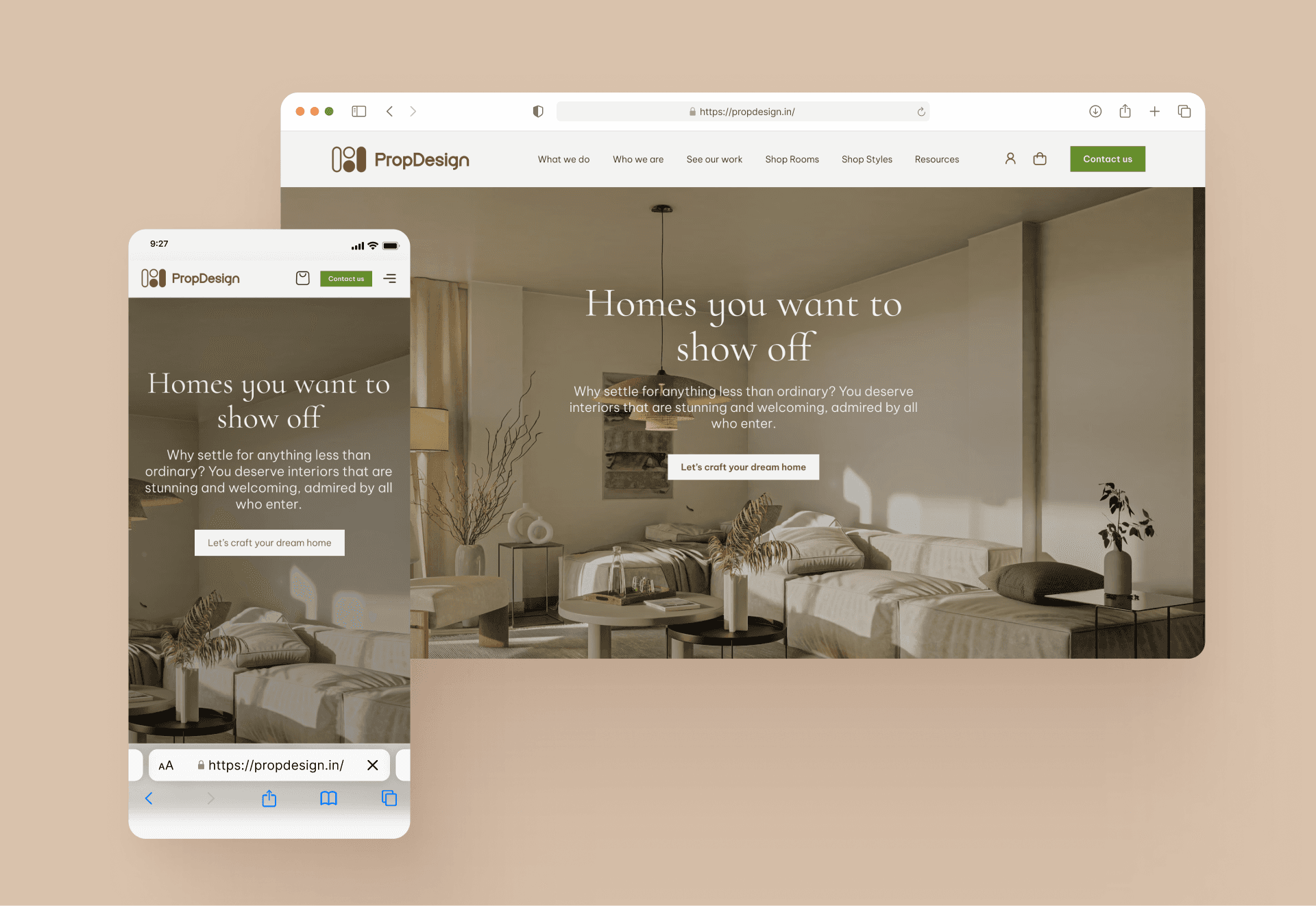
a full brand refresh and website redesign for a Bengaluru interior design firm, including a first-of-its-kind style library that lets users shop interior looks and book consultations. 20 organic leads in the first week, with zero paid ads.
00

problem
PropDesign had been operating for nearly a decade but their visual language and digital presence weren't keeping up. They were growing, getting more work, and needed a fresh start: new brand, new website, new positioning. The real challenge wasn't just a redesign. It was figuring out how to make a website that actually converted visitors into consultations, not just showcased pretty interiors.
solution
A full brand identity refresh paired with a website built around a Style Library, a browsable catalogue of interior looks organised by room and style, with an add-to-cart flow that lets users curate their preferences before booking a consultation. Simple for the user, powerful for the business.
getting to the idea.
the question that changed everything
The brief was simple on paper: new brand, new website. But we kept asking a harder question, how do we make this website actually convert visitors into consultations, not just look good? That question changed everything.
finding the right idea
We explored a lot of directions. A moodboard builder. AI-powered style matching. Even a basic virtual reality room preview. Each idea hit a wall, either too complex to build, too expensive, or too much friction for the user.
So we stripped it back to one question: what does a user need to feel confident enough to book a consultation? They need to see styles they love and feel heard before they even pick up the phone. That became the Style Library.
design decisions
The Style Library works like an e-commerce catalogue. Users browse interior looks filtered by room type and style, Classic, Contemporary, Traditional Indian, Minimalist. They save looks to a Style Cart, add a message, and check out to book a free consultation.
WooCommerce made it buildable within budget and timeline. The “add to cart” mental model meant zero learning curve, users already knew how to shop online.
The key insight: most interior design websites ask you to fill a generic form. PropDesign now asks you to show them what you love first. That context makes every consultation more valuable for both sides.
my role.
I led design end to end: the brand refresh (logo, colour system, typography) and the full website redesign, including architecting the Style Library and Style Cart flow. I worked closely with an external positioning consultant PropDesign had brought in, and with a content writer who drafted copy that I then implemented and refined directly on the site. I also sat with the PropDesign team to map out the full catalogue, every style, every room type, custom options included.
Developers built the site; I didn’t just hand off and step back. I reviewed every iteration critically, gave detailed feedback, and worked in parallel with the dev team through multiple rounds. I also handled all content uploads, imagery, and final optimisation myself. A separate team handled social media assets and advertising alongside this work.
how it came together.
Developers turned around the first draft within a week. Full brand and website shipped in 30 days.
brand identity.
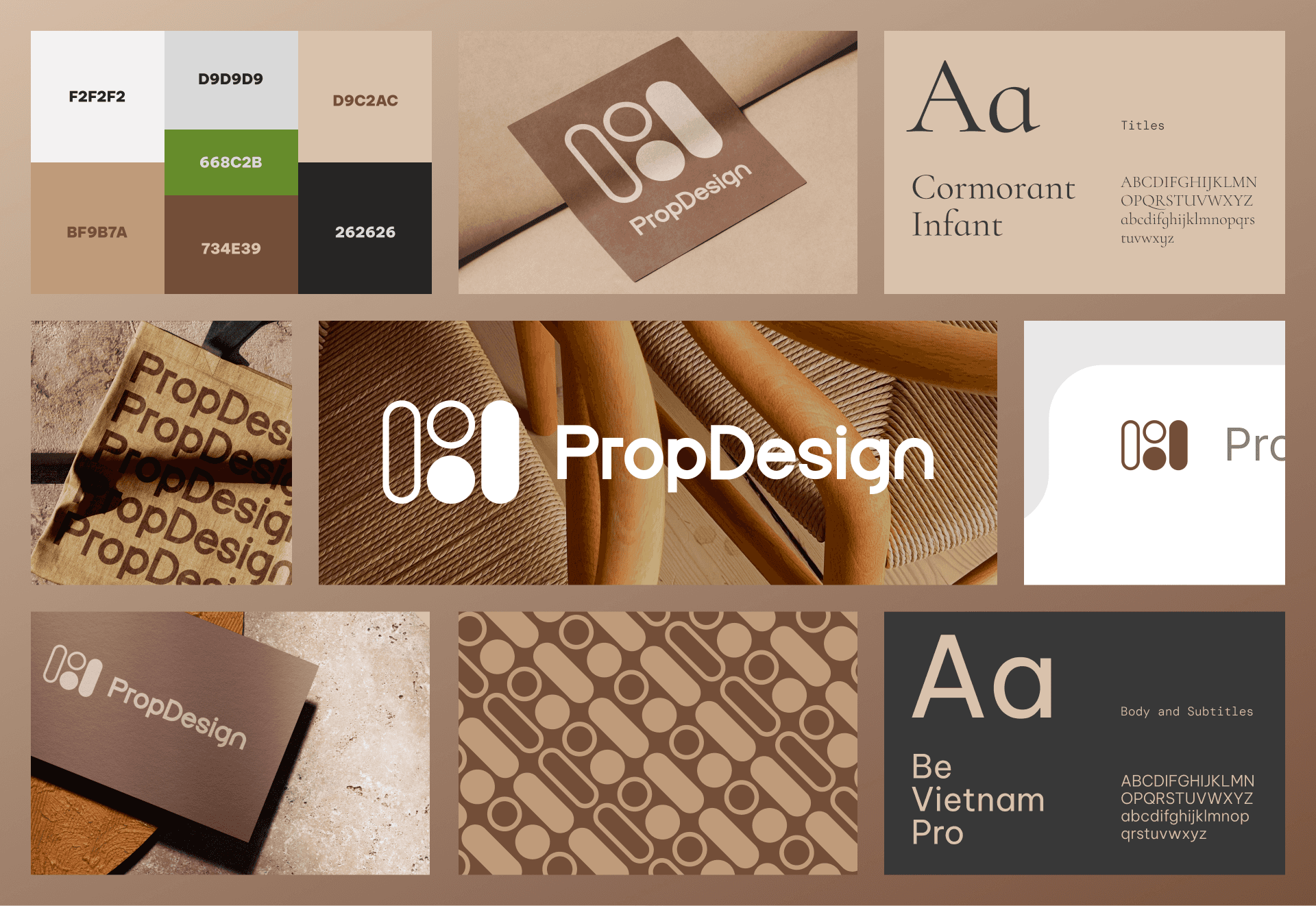
Alongside the website, I led the full brand refresh: new logo, colour system, and typography. The warm, earthy palette and refined typography were designed to signal premium quality without feeling cold or corporate. The brand system extended across print, digital, and pattern applications.
the impact.
PropDesign shared the new site with their existing network. Within the first week, 20 organic leads came in through the Style Library flow. No paid ads, no campaigns, just a better experience that made people want to engage.
The homepage carries its own trust numbers too: 4+ years in business, 200K+ sq ft of interiors delivered, and 50+ happy clients, all visible before a visitor is asked to commit to anything.
The Style Library reframed how PropDesign connects with clients, from a passive portfolio to an active conversation starter.
the trade-offs.
imagery
The vision was curated, multi-image galleries for every room and style, showing different angles, lighting, and moods. Reality was AI-generated images with one per style, due to time and resource limits on the client side. It works, but it’s not the full experience we had in mind.
the moodboard pivot
We didn’t abandon the moodboard idea immediately, we actually worked on it for a few days. The client then pushed for a faster delivery timeline, which is when we made the call to pivot to the Style Cart flow. In hindsight it was the right decision, but it wasn’t the original plan.
development constraints
The Style Cart and checkout went through changes during development. The custom message field visible in the design didn’t make it to the live site, due to technical limitations from the dev team.
portfolio imagery
The “See Our Work” section suffers from undocumented projects and unstyled spaces. The client never photographed their completed interiors professionally, what’s live is functional but doesn’t do justice to the actual quality of their work.
See the final product live at propdesign.in
year
2024
timeframe
30 days
tools
Figma, WordPress, Elementor
category
UI/UX and Branding
01

02
03

04

05

06

07

08

09

010

011

see also


