turning a broken website into a converting store, 8% sales lift
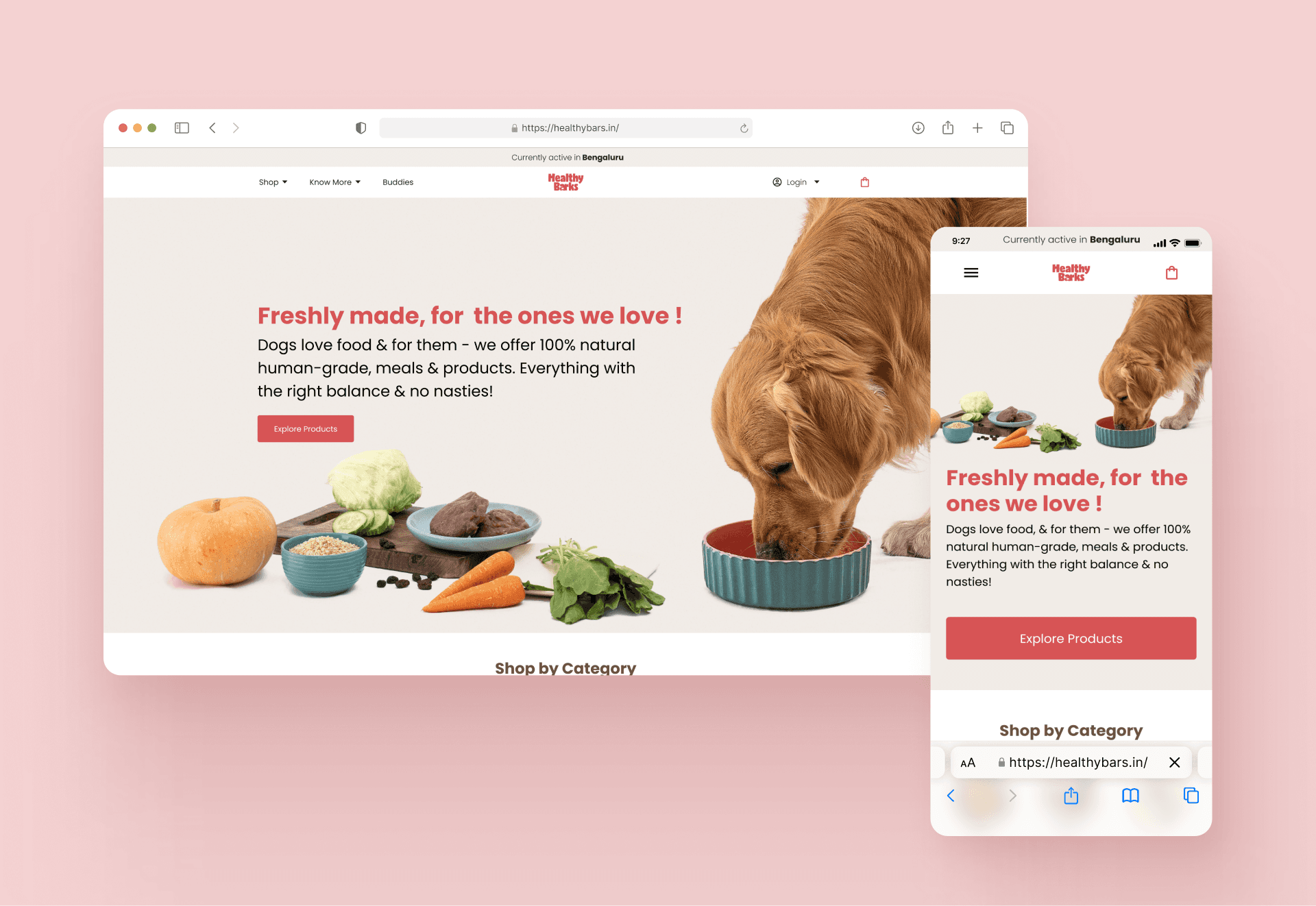
a full website redesign and design system for HealthyBarks, a Bengaluru-based fresh dog food startup. Took the site from a broken prototype to a converting Shopify store, with an 8% sales increase after launch.
00

problem
The existing site looked broken: inconsistent, not mobile friendly, and doing nothing to communicate what made HealthyBarks different. Pet parents landing on it had no clear reason to trust it, let alone buy from it. The goal: build a website that told the HealthyBarks story clearly enough to convert visitors into customers.
solution
A full redesign on an atomic design system, covering the homepage, store, product pages, an education hub, and the custom consultation flow. We later migrated from WIX to Shopify with a specialist agency, which is where the design finally came together and shipped as intended.
my role.
This was a very small, early-stage team: a product manager, a marketing lead, a developer, a CEO, a nutritionist, and me as the designer, plus kitchen and delivery staff. In the early stages I owned design end to end, from visual identity to UX to the full website build. Later, two content writers joined for copy, a second designer joined to support marketing (not the core product), and a junior developer joined engineering.
expanding the brand and establishing a visual language.
building on what existed
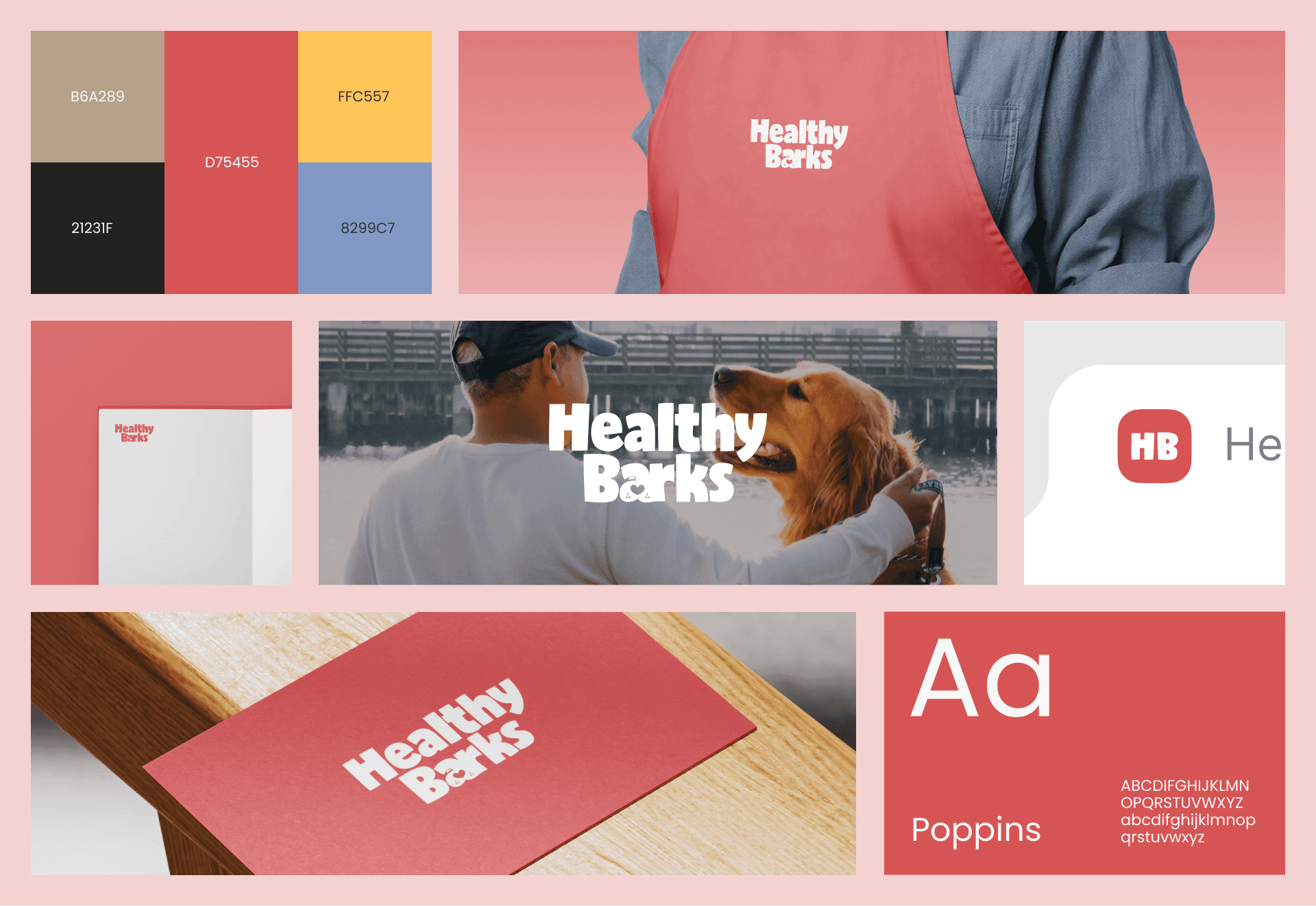
The branding, logo, colours, and basic guidelines were already in place when I joined. My job was to expand that into a full visual language for the website: how the brand speaks, what it looks like in context, and how every element works together across pages.
the illustration debate
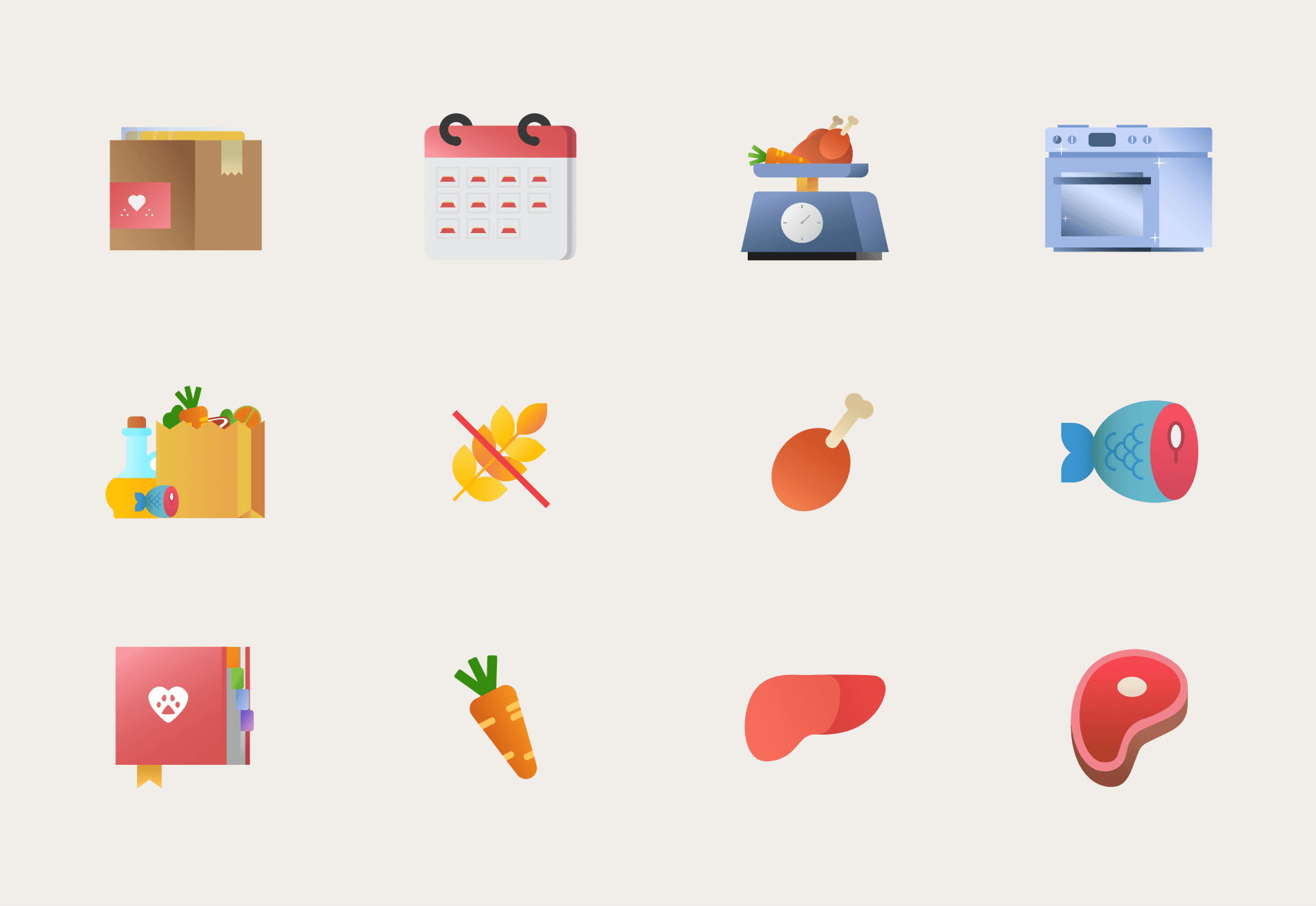
One early decision was photography versus illustration. I pushed for illustration. We were targeting the Indian market, good Indian dog photography didn't really exist yet, and a custom illustration style would give the brand a warmer, more distinctive feel.
We landed on a mix of both, a flat illustration style with gradient depth, simplified, accurate, and warm. It felt right for a food brand trying to build trust with pet parents.
the design system
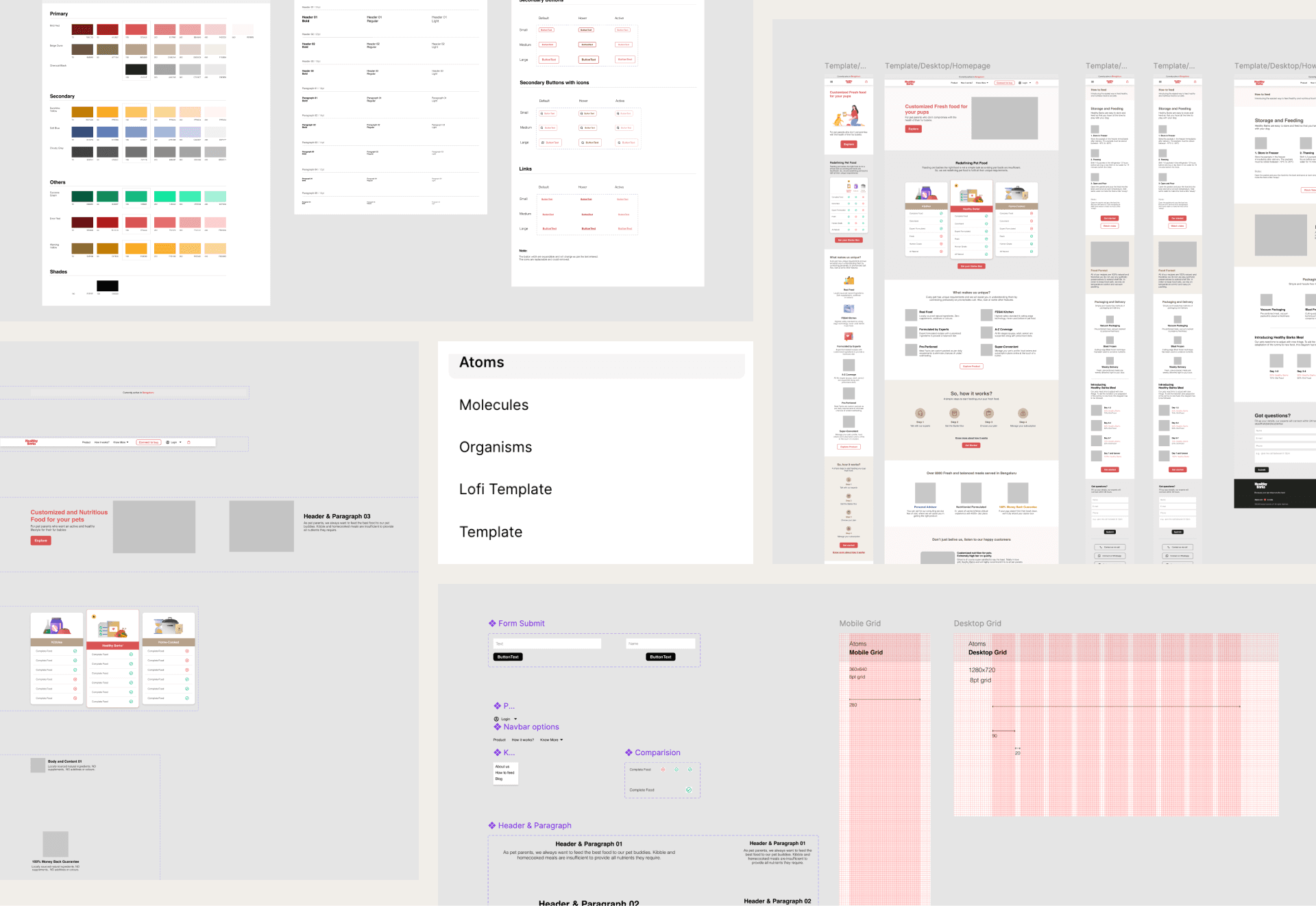
Once the visual direction was set, I built a full atomic design system: colours, combinations, typography, spacing, layout guidelines for desktop and mobile, a component library, and a visual language guide for image and illustration usage. It gave the project a consistent foundation to move forward on.
what we were designing for.
more than a shop
HealthyBarks wasn't just a petfood store. Every product was calibrated to the dog, segmented by size, life stage, and specific medical needs, with a custom consultation option that stayed live throughout for pet parents who wanted meals built around their dog specifically. The range covered fresh meals, boosters, bone broth, dehydrated treats, and frozen treats.
the story we needed to tell
The core message was tricky to land: what most pet parents feed their dogs every day is slowly falling short of what the dog needs. HealthyBarks was the alternative, expert-formulated, balanced, and convenient. Getting that across without sounding preachy was the real design challenge.
So the website worked as a knowledge hub as much as a shop. Before asking anyone to buy, it educated pet parents on how kibble is made, why home-cooked food falls short, and how HealthyBarks fills the nutritional gaps. Dedicated pages for redefining pet food, how to feed, and success stories gave pet parents the full picture before they reached the store. By checkout, they weren't just browsing, they understood why they were there.
from custom meals to e-commerce.
what changed
The original model, custom meals filled through a form, wasn't converting at the scale the business needed. Roughly 80 to 90% of visitors were dropping off right at the form itself, the one step required to order at all. The team moved to a full e-commerce model while keeping the custom consultation option available for pet parents who still wanted it.
shopify changed everything
The pivot came with a decision to move from WIX to Shopify and bring in a specialist agency. That was the turning point. For the first time, the design was being built by a team with the right expertise. We agreed on a theme, I adapted the design system to fit it, and the website finally started looking and functioning the way it was meant to.
how it came together.
the photo shoot
We ran a proper photo shoot, real products, real ingredients, real dogs. Combined with the Shopify migration and the refined design, the website finally had the visual quality the brand deserved.
the storytelling layer
On the homepage we added a direct comparison — HealthyBarks vs kibble vs homemade food — making the case for fresh food in a single scroll. Dedicated pages for fresh meals, boosters, and success stories gave pet parents the context and confidence to buy. That combination of honest positioning and clean design is what drove the results.
the impact.
Sales rose 8% after the Shopify launch, driven by the new store, cleaner design, stronger photography, and a website that finally worked the way it was supposed to. By launch, the site was also carrying its own trust signals: 60,000+ meals delivered, a 4.9/5 average rating, and 500+ happy dogs, built into the homepage instead of buried in a deck.
A full atomic design system got delivered, a custom illustration style got built from scratch, and every page of the site got redesigned across a year of iteration, pivots, and cross-functional work.
trade-offs.
The design system was built in Helvetica, but the Shopify move meant adapting the entire design to Poppins to fit the theme. Most of the original design work was effectively rebuilt from scratch.
The illustration style I developed was never fully carried forward. It got scaled back after a junior graphic designer joined the team, and maintaining visual consistency without a proper handoff process became harder than it should have been.
The website never reached its full potential. HealthyBarks ran out of funding in early 2023 and shut down before the vision was completely realised.
what I'd do differently.
Push for Shopify from the beginning, rather than spending months working around an underpowered development setup.
Build the design system in the final chosen font from day one. Rebuilding everything for Shopify cost significant time.
Run the photo shoot earlier. The visual quality jump it created should have happened at the start, not midway through.
year
2021–22
timeframe
12 months
tools
Figma, Zeplin, Shopify
category
UI/UX
01

02

03

04

05

06

07

08

see also


